
Cattle production in Capanda

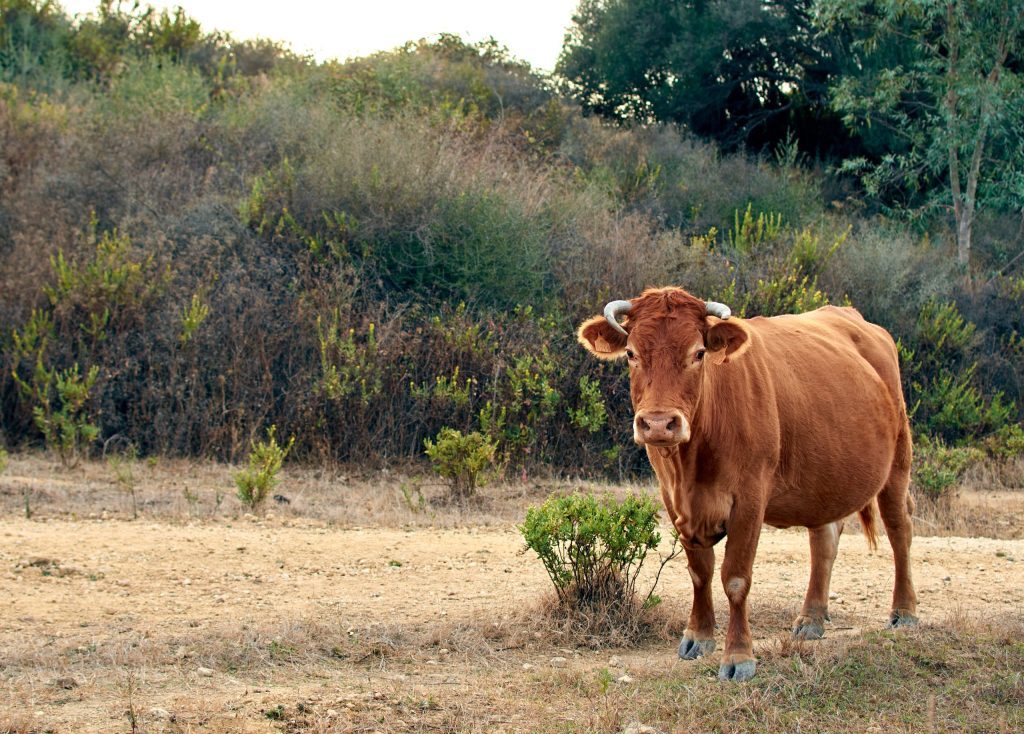
One of the potential investments signalled for the Capanda Agro-Industrial Pole involves the cattle value chain, which includes a production system through crop-livestock integration and a slaughterhouse. It should be noted that, in any case, the investor must assess the organization of the chain upstream and downstream of their investment, ensuring that the links in the chain are effective.
The Capanda Agro-Industrial Pole was designed from the perspective of developing agricultural production chains with the aim of organizing production in a chained and integrated manner across its various segments. There is a considerable set of productive chains with greater potential for implementation in the area.

Poultry value chain in Capanda

One of the potential investments signaled for the Capanda Agro-Industrial Pole involves the growth of the poultry value chain. This includes investments in grain production, storage, soya processing, feed mills, hatcheries, poultry houses, and poultry slaughterhouses. It should be noted that, in any case, the investor must assess the organization of the chain upstream and downstream of their investment, ensuring that the links in the chain are effective.
The Capanda Agro-Industrial Pole was designed from the perspective of developing agricultural production chains with the aim of organizing production in a chained and integrated manner across its various segments. There is a considerable set of productive chains with greater potential for implementation in the area.

Grain production in Capanda

One of the potential investments signalled for the Capanda Agro-Industrial Pole involves the production of grains, specifically soybeans, corn, and sorghum, as well as storage and a soy complex for refined oil and bran. It should be noted that, in any case, the investor must assess the organization of the chain upstream and downstream of their investment, ensuring that the links in the chain are effective.
The Capanda Agro-Industrial Pole was designed from the perspective of developing agricultural production chains with the aim of organizing production in a chained and integrated manner across its various segments. There is a considerable set of productive chains with greater potential for implementation in the area.

Production of perforated zinc sheets and insulating panels in Malanje

The Malanje Industrial Development Pole offers a favorable setting for investments in the production of perforated zinc sheets and insulating panels. Benefiting from convenient access to top-quality raw materials and capitalizing on the region’s logistical and strategic strengths, the pole provides a distinctive opportunity for entrepreneurs aiming to tap into the thriving potential of this promising industry. The Malanje Industrial Development Pole occupies a strategic position, located in the province of Malanje, close to the national road 230, only about 5 km from the city of Malanje, in the Vila Matilde neighbourhood, in the locality of Quinguila. In addition, it offers easy access by land to several directions: to the north and north-west with Uige, to the west with Kwanza Norte, to the south-east with Kwanza Sul, to the south with Bié and to the east with the North and South Lundas, which border the Democratic Republic of Congo.
This privileged geographical location, combined with other factors such as the availability of natural resources and supporting infrastructure, create a favourable environment for industrial development, investment attraction and economic growth in the Malanje region and its surroundings.
The presence of the Malanje – Luanda railway line is another favourable factor that contributes as an additional incentive for potential investors. This strategic location offers logistical and connectivity advantages, making the Malanje Industrial Development Pole an attractive destination for industrial investments, enabling the efficient flow of products and raw materials to various regions.
Red clay ceramics in Malanje

The production of red clay ceramics finds a favorable environment to flourish. The quality natural resources and the strategic location of the pole offer a unique opportunity to invest in the artisanal production of red clay pottery.
The Malanje Industrial Development Pole occupies a strategic position, located in the province of Malanje, close to the national road 230, only about 5 km from the city of Malanje, in the Vila Matilde neighbourhood, in the locality of Quinguila. In addition, it offers easy access by land to several directions: to the north and north-west with Uige, to the west with Kwanza Norte, to the south-east with Kwanza Sul, to the south with Bié and to the east with the North and South Lundas, which border the Democratic Republic of Congo. This privileged geographical location, combined with other factors such as the availability of natural resources and supporting infrastructure, create a favourable environment for industrial development, investment attraction and economic growth in the Malanje region and its surroundings.
The presence of the Malanje – Luanda railway line is another favourable factor that contributes as an additional incentive for potential investors. This strategic location offers logistical and connectivity advantages, making the Malanje Industrial Development Pole an attractive destination for industrial investments, enabling the efficient flow of products and raw materials to various regions.

Processing of cassava starch and various juices in Malanje

The Malanje Industrial Development Pole presents an advantageous environment for investments in cassava starch processing and production of various juices. With easy access to local raw materials, coupled with the logistical and strategic advantages of the region, the pole constitutes a unique opportunity for entrepreneurs seeking to exploit the growing potential of this promising sector. The Malanje Industrial Development Pole occupies a strategic position, located in the province of Malanje, close to the national road 230, only about 5 km from the city of Malanje, in the Vila Matilde neighbourhood, in the locality of Quinguila. In addition, it offers easy access by land to several directions: to the north and north-west with Uige, to the west with Kwanza Norte, to the south-east with Kwanza Sul, to the south with Bié and to the east with the North and South Lundas, which border the Democratic Republic of Congo. This privileged geographical location, combined with other factors such as the availability of natural resources and supporting infrastructure, create a favourable environment for industrial development, investment attraction and economic growth in the Malanje region and its surroundings.
The presence of the Malanje – Luanda railway line is another favourable factor that contributes as an additional incentive for potential investors. This strategic location offers logistical and connectivity advantages, making the Malanje Industrial Development Pole an attractive destination for industrial investments, enabling the efficient flow of products and raw materials to various regions.

Fish farming unit in Capanda

Located in the PAC – Pólo Agro-industrial de Capanda infrastructures, specifically in the Capanda reservoir, this fish farming unit is equipped with nurseries, 100 tanks of 6 cubic meters each (with a total production capacity of 20 tons/month of fish), nets that are cast into the river (distributed over 5000 square meters, but located in the reservoir, with the entire area available for production) and a fish preparation centre (fillets), including processing and packaging for sale. The business currently has 10 trained technicians.

Capanda Farm

A land of 100 hectares, located near the city of Cacuso, near the main road that connects Cacuso to Dondo, and with direct access to the Capanda dam through the farm, the property has a borehole and 2 reservoirs on the land, taking advantage of groundwater. The larger reservoir supplies the part of the farm across the road. All electricity is powered by solar energy. In terms of infrastructures, the property has conditions for the assembly of a feed mill, which is a perfect opportunity waiting for investment, given animal food rations have little supply, but a high demand in the region by local livestock producers. The property has a degradated structure ready to become an aviary, which can also be adapted to another type of farming. It also has a tree farm, previously exploited, but inactive. Currently, the production being made in the whole farm is only the growth of  “feet” or coffee seedlings. The land is suitable for planting fruit trees and coffee, but has the capacity to produce other crops such as soybeans, corn, etc.

Quizenga – Lutete Farm

The Quizenga – Lutete Farm is located in the province of Malanje, in the Capanda Agro-industrial Pole (PAC). It has a total area of 5000 hectares of which 3100 hectares are already being worked by the promoting entity (1050 hectares are irrigated by central pivot, 840 hectares by drip irrigation and 1210 hectares in rainfed conditions). Due to the favorable climate conditions, these fertile lands deliver 2 harvests per year.
The property has several infrastructures that make the asset very attractive for investment. The industrial complex has four silos with a total storage capacity of 9000 tons (two silos with a capacity of 3500 tons each, the remaining silos have a capacity of 1500 and 500 tons respectively), a feed mill (whose product is in great demand by neighboring producers), a unit for selection and processing of seeds, 30 plots of 20 hectares each (making a total of 600 hectares) with hydrants installed and 48 plots distributed in an area of 840 hectares irrigated.
The farm also has a dam installed for irrigation of 9 million m3, generators (alternative energy), internet supply, a workshop, two fuel pumps with a capacity of 20 thousand liters each, a parking lot, a cafeteria, office, and a residential park. The land is ideal for growing corn, beans, and soybeans. The site has an access road. And it has all the legal documentation necessary for agricultural projects in Angola.